For nearly three decades, it was difficult to separate Sue Aikens from Kavik River Camp. The isolated Alaskan outpost was more than her workplace or the setting of a television program. It was her home, her livelihood and the place where she built an identity around independence, endurance and survival.
That chapter has now ended.
In a deeply emotional social-media statement, the former Life Below Zero star confirmed that Kavik is no longer in her possession and that she is no longer living at the camp.
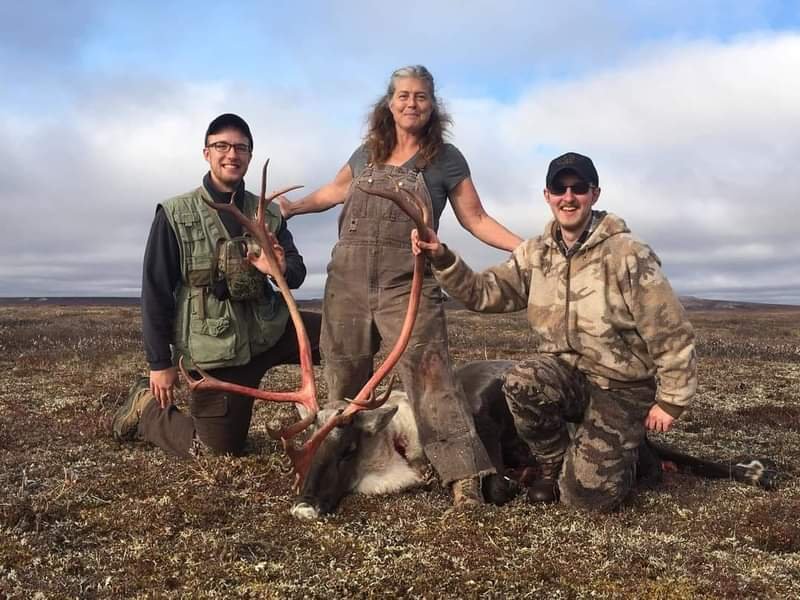
Sue Aikens’ journey to Alaska
Long before she became one of television’s most recognizable survival personalities, Sue experienced a difficult childhood that forced her to become independent at a young age.
Sue has said that she moved from the Chicago area to Alaska with her mother when she was approximately 12 years old. According to her account, her mother later left her at a remote property outside Fairbanks, requiring Sue to find ways to care for herself and continue attending school. Instead of being defeated by Alaska’s isolation, she gradually discovered that she felt safer and more comfortable in the wilderness than she did around unpredictable people.
Her relationship with Alaska became the foundation of her adult life. She learned to repair machinery, operate remote facilities, monitor weather, hunt, gather supplies and prepare for emergencies in locations where immediate assistance was rarely available.
Eventually, that path led her to Kavik River Camp, an isolated logistics outpost on Alaska’s North Slope. The camp is situated roughly 50 miles southeast of Deadhorse and is primarily reached by aircraft. It sits near an unmanaged airstrip and has historically served pilots, government personnel, researchers, commercial guides, tourists and oil-and-gas workers.
She worked at Kavik before she owned its assets
Sue did not arrive at Kavik as the owner.
The camp’s history began long before her involvement. Alaska records say the gravel pad was constructed during the 1950s to support oil and gas exploration. During the early 1990s, companies including Mobil Oil and ConocoPhillips held permits for fuel caches near the Kavik airstrip. Beginning in 1991, the state issued a series of permits to Taiga Ventures for a tent camp and fuel-storage operation.
Sue later worked as Kavik’s caretaker under Taiga Ventures. Although the exact starting year of her employment is not clearly stated in the public land document, the state confirmed that she held the caretaker position for several years.
Being Kavik’s caretaker was far more demanding than watching over a collection of cabins. Sue was responsible for protecting and operating an isolated commercial facility surrounded by tundra, dangerous weather and wildlife. Fuel had to be stored and monitored, generators and machinery needed constant repairs, arriving aircraft required updated weather information, and guests depended on the camp for food, lodging and communication.
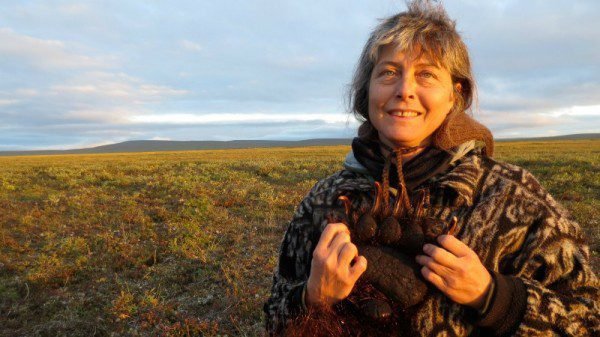
Sue gradually became the human face of Kavik. She knew its equipment, terrain, customers and seasonal dangers better than almost anyone else.
In May 2013, her role changed dramatically. Sue purchased Kavik River Camp’s assets from Taiga Ventures, and the camp’s operations were transferred to her. The State of Alaska then issued Land Use Permit LAS 28839 in Sue’s name, authorizing her to provide support for oil-and-gas activity and other customer services.
That same year, Life Below Zero premiered on National Geographic. The program introduced viewers to several people living in remote parts of Alaska, but Sue quickly became one of its most memorable personalities. Audiences watched her maintain the camp, protect herself from wildlife, repair damaged equipment and cope with extreme cold and isolation.
The series followed her life for approximately 12 years before its National Geographic run ended after 2025. The production received multiple Emmy Awards, while Sue became closely associated with the franchise’s success and authenticity.
Did Sue really own Kavik River Camp?
Sue owned Kavik’s business assets and privately constructed infrastructure, but she did not own the underlying land in the traditional sense.
The approximately 20-acre camp site belongs to the State of Alaska. Sue operated on that state land through LAS 28839, a land-use permit. State documents identify the surrounding property as state-owned and explain that no corporate land was involved in the proposed lease area.
Sue did, however, own important physical assets at the camp. Alaska records described the buildings and infrastructure as privately owned by the permit holder. The equipment included camp structures and large tanks used for aviation fuel, heating fuel and other operations.
Therefore, when Sue was commonly called the “owner of Kavik,” that description referred primarily to her ownership of the camp operation, its assets, its business and its improvements—not unrestricted private ownership of the land beneath it.
That distinction may be central to understanding why she eventually lost control.
The state began planning a competitive lease
For years, Sue operated Kavik through a land-use permit. However, the amount of infrastructure on the site eventually led the Alaska Department of Natural Resources to conclude that a long-term commercial lease would be more appropriate.
The state had begun reviewing a possible negotiated lease as early as 2018. By 2020, officials had received two separate applications for the Kavik site. Because more than one party wanted the lease, Alaska law required the department to consider a competitive public-auction process rather than automatically granting long-term control to the existing operator.
The proposed arrangement involved a 25-year lease covering approximately 20 acres. Qualified participants would be required to submit viable business plans demonstrating that they could maintain Kavik’s essential services.
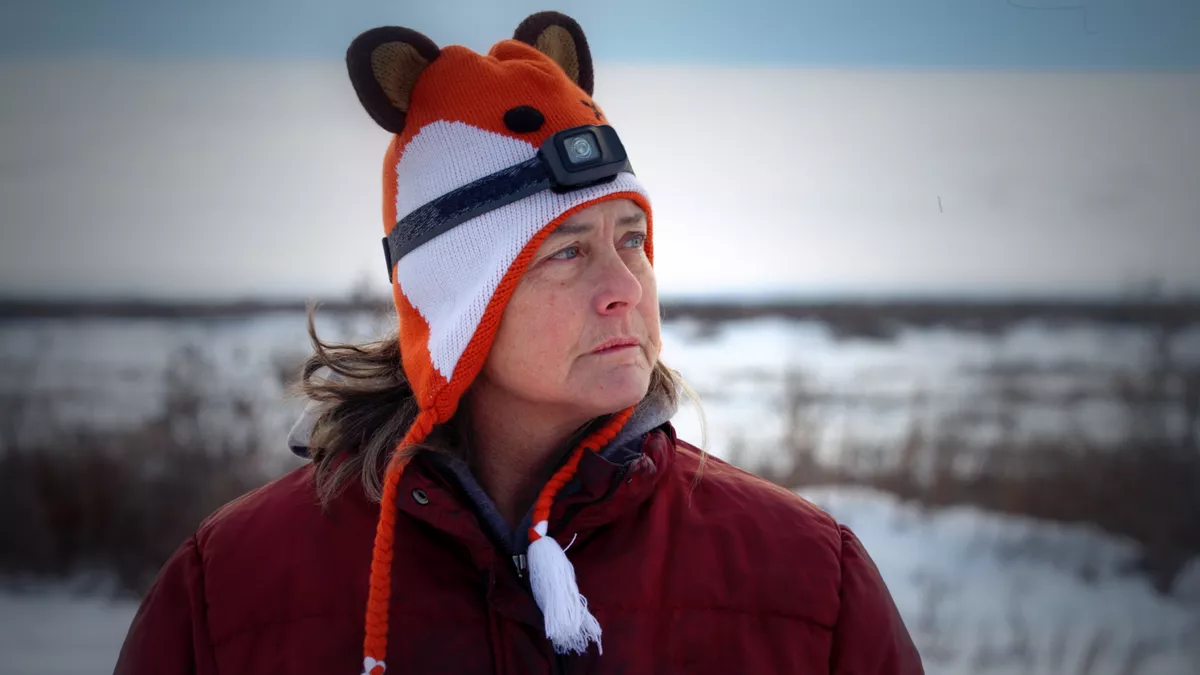
Those services were significant. Government agencies and other users told the state that they relied on Kavik for aviation fuel, weather updates, food, lodging, internet access and airstrip maintenance. The U.S. Fish and Wildlife Service described the camp as a critical resource for research and aviation operations, particularly when coastal fog made landing elsewhere difficult.
The state also noted that the two applications included possible upgrades such as a new lodge, a hangar, improved fuel facilities, renewable-energy equipment, showers, waste systems and additional infrastructure. These were proposals under consideration, not improvements that were guaranteed to be built.
What would happen if another bidder took control?
The 2020 preliminary decision anticipated the possibility that Sue might not become the successful long-term leaseholder.
Because Sue owned the existing infrastructure, a different winning bidder could not simply take her privately owned buildings and equipment without addressing their ownership. The state said a successful bidder who did not own those improvements would need to negotiate with Sue to purchase the on-site infrastructure. Otherwise, Sue would be allowed a specified period to remove her property.
The state also proposed extending Sue’s permit for one year after an auction if she were not the successful bidder. That period would provide time to remove or transfer infrastructure while reducing interruptions to Kavik’s services.
This language closely resembles the type of transition Sue has now announced: Kavik is no longer in her possession, corporate entities were involved, and another corporation is in charge.
However, the available documents do not prove that Sue was defeated at a public auction. They describe a process the state proposed in 2020, but they do not publicly identify the final winning bidder or reveal the private agreements that followed.
Why did Sue leave or lose control?
Sue has deliberately declined to explain the precise reason.
Her statement suggests that the transfer involved more than a simple personal decision to retire. By referring to several corporate entities and saying that the “semantics” of the change were private, she indicated that contracts, ownership arrangements, permits or negotiations may have played a role.
The most responsible conclusion is that Sue’s departure was probably connected to Kavik’s unusual ownership structure and the long-running effort to replace its temporary land-use authorization with a more permanent corporate or commercial arrangement.
Several possibilities remain:
Sue may have sold her buildings, equipment and business interests to the corporation that secured control of the site.
Another qualified bidder may have obtained the long-term state lease, leading to a negotiated purchase of Sue’s infrastructure.
The original lease applicant may have transferred or assigned its interest to another corporation with the state’s approval.
Sue and the other entities may have reached a private settlement covering both the physical assets and future operations.
The state’s preliminary terms allowed an issued lease to be assigned to another individual or corporation, but only with written approval from Alaska officials.
None of these scenarios has been publicly confirmed. It would therefore be misleading to claim that Sue was evicted, forced out for misconduct, defeated at auction or voluntarily sold Kavik for a specific amount.
Her emotional language does make one point clear: leaving Kavik was painful, and it was not simply a casual retirement announcement.
Who controls Kavik now?
Sue has not publicly named the corporation.
Taiga Ventures has been mentioned by some fans because it operated Kavik before Sue purchased the camp assets in 2013. However, there is currently no reliable public evidence confirming that Taiga Ventures has returned as the operator.
There is also no evidence that National Geographic, Disney or BBC Studios took control of Kavik. Those companies were connected to the production and distribution of Life Below Zero, not ownership of the state land or the camp’s physical operation.
Until Sue, the State of Alaska or the new operator makes a formal announcement, the corporation’s identity should be treated as unknown.
Sue has nevertheless asked fans not to assume the worst. She said the new corporation is reputable and has its own plans. Her statement suggests that Kavik may continue operating in some form, although its future services, buildings, public access and business model have not been announced.
What is Sue Aikens doing now?
Leaving Kavik does not mean Sue has disappeared or abandoned life in Alaska.
In March 2026, she released her memoir, North of Ordinary: How One Woman Left It All Behind for Wilderness and Wonder in Alaska’s Frozen Frontier. The 304-page book recounts her childhood, the experiences that shaped her independence and the decades she spent surviving in remote Alaska. It was published by Sourcebooks on March 10, 2026.
Sue supported the release through author events, interviews, podcasts and public appearances. During a March event in Spokane, she discussed the trauma of her childhood, her connection to Alaska and the lessons she learned from isolation and survival.
She also continues sharing updates from her Chena-area cabin property near Fairbanks. Her social-media posts have shown her maintaining and treating the cabins, working on off-grid projects, gardening, cooking and observing wildlife. The Chena property had already served as a second base and a place where she could recover, work and spend time closer to family and basic services.
It is reasonable to believe she will now spend more time there, but Sue has not issued a detailed statement naming it as her permanent full-time residence.
Her television future is also uncertain. Life Below Zero ended its National Geographic run, but BBC Studios retains ownership of the format, and members of the production team have expressed hope that the franchise could eventually find a new television or streaming home. No new series starring Sue has been officially announced.
For now, Sue’s life appears to be entering a period of reinvention. She is an author, public speaker and social-media personality, while continuing the cabin projects and Alaskan lifestyle that existed beyond the television cameras.
Kavik may no longer belong to her, but the experience shaped nearly 30 years of her life. It transformed her from an isolated caretaker into a camp owner, television star and symbol of survival for viewers around the world.
Sue’s farewell was not an announcement that she had given up. It was an acknowledgment that even the most defining chapters eventually end—and that survival sometimes means accepting a painful change before deciding what comes next.
