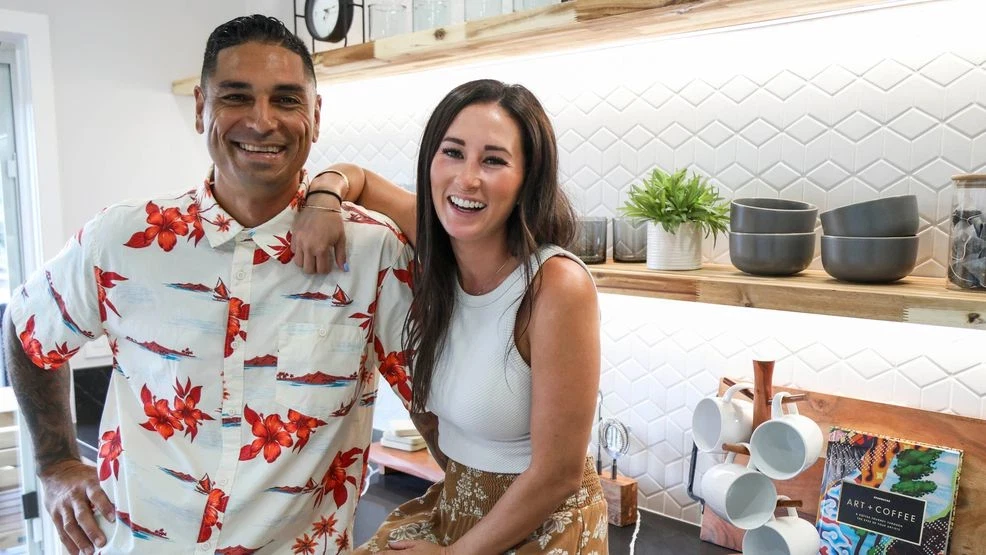
Renovation Aloha Season 3 Episode 10 was meant to be emotional, meaningful, and deeply connected to one of Hawaiʻi’s most painful recent tragedies. Instead, some viewers walked away calling the episode “lacking,” “strange,” and even “boring.”
The HGTV series, led by husband-and-wife renovation duo Kamohai and Tristyn Kalama, has built its identity around Hawaiian culture, family-centered storytelling, and home transformations inspired by island life. But the reaction to Season 3 Episode 10 shows that not every heartfelt episode lands the way producers may hope.
For many fans, the issue was not that the episode focused on people affected by the Lahaina fire. Several viewers made it clear they understood the devastation, respected the seriousness of the tragedy, and appreciated seeing attention brought back to families still rebuilding their lives. The problem, according to critics, was that the episode seemed to lean so heavily into emotional storytelling that the actual renovation felt pushed into the background.
One viewer summed up the frustration by saying the episode felt less like a home-design show and more like an attempt to pull at the audience’s heartstrings. They also pointed out how often the word “fire” seemed to come up throughout the episode, suggesting that the show repeated the emotional framing so much that it began to feel overly produced rather than naturally moving.
That reaction opened up a larger conversation among fans about what Renovation Aloha has become in its third season.
Viewers Felt the Renovation Took a Back Seat
One of the biggest complaints was that Episode 10 did not spend enough time on the actual design and construction process.
HGTV fans usually tune in for the transformation: the before-and-after, the design choices, the renovation problems, the creative solutions, and the final reveal. But in this episode, some viewers felt those familiar renovation beats were overshadowed by the family’s backstory, the Lahaina fire connection, and the emotional weight of the rebuild.
A few fans said this has become a broader issue with the show. They argued that over the past few seasons, Renovation Aloha has started focusing less on the houses themselves and more on human-interest stories. While personal stories are a major part of modern HGTV programming, some viewers believe this episode pushed that format too far.
Instead of feeling like a full renovation journey, the episode came across to some as filler. One viewer even said the Kalamas did not seem as involved in the actual home build as usual, noting that parts of the frame and foundation were reportedly donated or handled by others. To them, Tristyn’s design work felt reduced to decorating and adding finishing touches rather than leading a major transformation.
That criticism does not mean viewers were against helping the family. In fact, many said they were happy to see people receive support after losing so much. But they still wanted the show to deliver the renovation content they expected from HGTV.
The Emotional Drama Did Not Work for Everyone
Another major reason some fans called the episode boring was the way the show handled the family’s personal situation.
Episode 10 included a storyline involving the homeowners’ parents being in a serious car accident and needing the home finished earlier so they could recover there. That twist was clearly meant to raise the stakes and create urgency for the renovation timeline.
However, several viewers said the storyline felt confusing or overly dramatic. Some questioned why the parents urgently needed to recover in a brand-new home instead of somewhere more familiar or medically appropriate. Others felt the episode did not clearly explain the severity of their injuries.
That confusion became stronger during the reveal. Some viewers said the parents did not appear to be in the kind of fragile condition the episode had suggested. Because of that, the “rush to finish” storyline came across to critics as manufactured TV drama rather than a naturally urgent situation.
One common complaint was that everyone involved was already donating time, labor, materials, and resources to help the family. So, for some fans, asking the team to push the timeline even harder felt like a huge request that needed more explanation.
Reality TV often builds tension through deadlines, unexpected problems, and emotional complications. But when viewers feel that tension is forced, it can have the opposite effect. Instead of making the episode more exciting, it can make fans feel manipulated.
That appears to be exactly what happened for some Renovation Aloha viewers.
Some Viewers Questioned the Scale of the Home
The episode also sparked debate over the size and cost of the rebuild.
Some fans wondered why one family received what appeared to be a very large, high-end home while many other Lahaina fire survivors are still struggling with insurance, housing, rebuilding costs, and displacement. One viewer questioned why the project seemed so big when more modest homes might have allowed resources to help more families.
Others pushed back by pointing out that the house may have been intended as a multigenerational home, not simply a home for the parents. Still, the size of the property, the number of rooms, the furnishings, and the polished final result left some viewers uncomfortable.
The discomfort seemed to come from the contrast between the luxury-level reveal and the broader reality of Lahaina’s recovery. The fire devastated an entire community, and many families are still facing long, complicated paths back to stability. Against that backdrop, some viewers felt the episode should have better explained why this family was chosen and how the larger rebuilding efforts were helping others too.
There was also discussion about nonprofit involvement. Some viewers said the show mentioned outside organizations helping with the rebuild, but they felt those groups should have been featured more clearly and thanked more directly. In a normal HGTV episode, viewers may not want too much sponsor-style content. But in this case, several fans said they would have welcomed more attention on the local businesses, nonprofits, donors, and community organizations making the project possible.
Instead, some felt the episode gave more visible attention to HGTV-branded products than to the charitable groups behind the build.
The Permit Drama Felt Small Compared to the Real Story
Another complaint was that the episode still used typical HGTV-style renovation obstacles even though the real-life context was much bigger.
Some viewers noticed that permit-related delays were used as a source of drama. But in an episode centered on the aftermath of the Lahaina fire and a family rebuilding from loss, a permit issue connected to an outdoor barbecue did not feel like a compelling main obstacle to everyone.
In fact, some fans said they have noticed permit discussions appearing more often since the Kalamas previously faced scrutiny over renovation permits. Because of that, viewers were more sensitive to how permit problems were presented in the episode.
For critics, the show seemed to be searching for standard renovation-show conflict even though the emotional and social importance of the episode was already significant. The result, they argued, made the structure of the episode feel awkward.
The Blessing Segment Divided Fans
The Hawaiian blessing shown in the episode also became part of the debate.
Some viewers complained that the blessing segments have become repetitive and said they fast-forward through them. For those fans, the blessing has started to feel like a repeated formula rather than a fresh or necessary moment in every episode.
However, other viewers strongly defended the blessing and pushed back against dismissive comments. They pointed out that in Hawaiian culture, a blessing is meaningful and should not be mocked or treated as nonsense. For these fans, the blessing is part of what makes Renovation Aloha distinct from other HGTV shows.
Some also said they appreciate the cultural reference and the positive moral tone it brings to the series. Others argued that the blessing itself is usually short and not as intrusive as critics suggest.
This part of the discussion shows a larger divide among viewers. Some want Renovation Aloha to focus more tightly on design, construction, and reveals. Others value the cultural elements and see them as essential to the show’s identity.
Not Everyone Thought the Episode Was Boring
Despite the criticism, the episode was not universally disliked.
Some viewers said they found the episode moving because it brought attention back to Lahaina and the people who lost homes, memories, and stability in the fire. For them, the emotional focus was not a weakness. It was the point.
Several fans said they were glad HGTV used its platform to highlight the ongoing recovery and to show that families are still trying to rebuild. Others said they were willing to give the episode more grace because of the subject matter.
One viewer said the episode felt unusual, but they gave it a pass because it was meaningful to see attention placed on the Lahaina fire victims and the organizations helping with rebuilding efforts. Another said they were touched by the family’s gratitude and reminded critics that the people involved had lost everything.
There were also fans who still like Kamohai and Tristyn as HGTV hosts. Even viewers who criticized the episode said the Kalamas remain among the less irritating personalities on the network compared to some other renovation-show leads.
So while Episode 10 was called boring by some, it also connected emotionally with others.
A Bigger Problem With Modern HGTV?
The reaction to Renovation Aloha Season 3 Episode 10 may also reflect a wider frustration with HGTV programming.
Several viewers complained that HGTV shows in general have shifted away from practical renovation and design and moved more toward reality-TV storytelling. Instead of watching detailed home transformations, audiences often get personal drama, product placement, emotional reveals, and repeated formulas.
For longtime HGTV fans, that change can feel disappointing. Many originally watched the network for design inspiration, construction challenges, smart makeovers, and satisfying reveals. When episodes become too focused on backstory or emotional stakes, some viewers feel they are no longer getting the show they signed up for.
That criticism is not limited to Renovation Aloha. But Episode 10 became a clear example of the divide between what producers may think makes compelling television and what some viewers actually want from a renovation series.
Why Episode 10 Sparked Such a Strong Reaction
Ultimately, Renovation Aloha Season 3 Episode 10 was called “boring” by some viewers because it did not feel balanced.
The episode had an important subject: a family rebuilding after the Lahaina fire. It had emotional stakes, charitable involvement, cultural elements, and a meaningful final reveal. But for critics, those pieces were not presented in a way that made the episode feel satisfying as a renovation show.
The renovation itself felt too light. The emotional drama felt too amplified. The car accident storyline raised more questions than answers. The size of the home made some viewers uncomfortable. The nonprofit contributions seemed underexplained. And the familiar HGTV formula, from product mentions to timeline stress, felt awkward against such a serious real-world tragedy.
Still, the episode also had defenders who saw it differently. To them, the story was a heartfelt tribute to Lahaina’s resilience and a reminder that families are still recovering long after the headlines fade.
That split reaction may be the most important takeaway. Episode 10 was not simply “boring” because nothing happened. It was controversial because viewers expected one kind of show and got something more emotional, more produced, and less renovation-focused than they wanted.
For some fans, that made the episode feel powerful. For others, it made it feel slow, forced, and frustrating.
Either way, the conversation around Season 3 Episode 10 proves that Renovation Aloha still has viewers talking — even when they do not all agree on whether the show is building something meaningful or drifting too far from its renovation roots.
