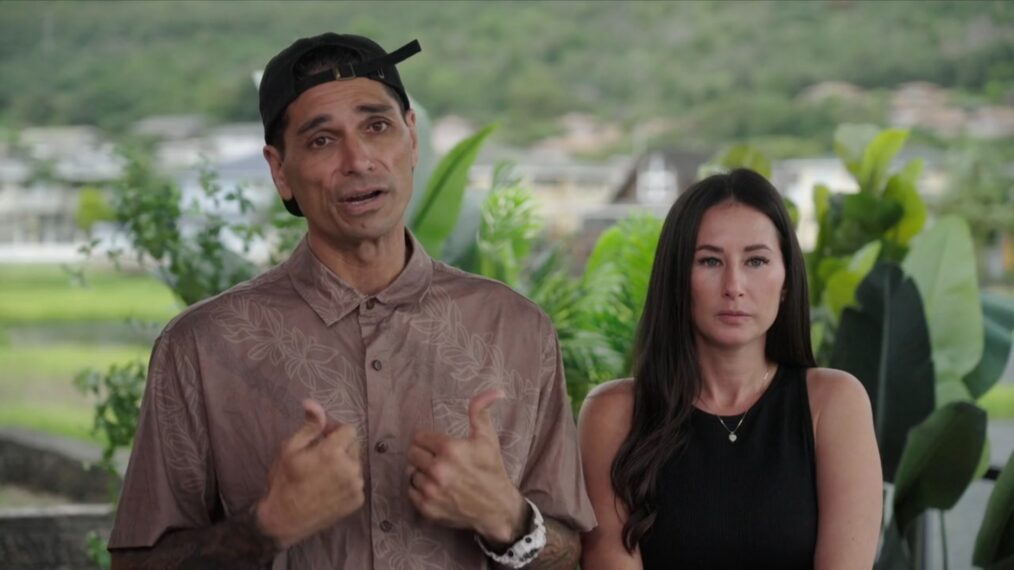
HGTV’s Renovation Aloha is facing serious backlash and legal scrutiny after an episode showed Native Hawaiian ancestral remains discovered inside a lava tube on Hawaiʻi Island.
The episode, titled “Bones On The Big Island,” featured husband-and-wife home renovators Tristyn and Kamohai Kalama as they came across what appeared to be human bones while exploring a lava tube on their property. Cameras were rolling when Kamohai noticed the remains, reacted in shock, and pointed out that there were bones inside the area.
That moment, which was included in promotional clips and the episode itself, has now become the center of a legal dispute involving the State of Hawaiʻi, HGTV, and the show’s production team.
At the heart of the controversy is a deeply sensitive cultural and legal issue: the filming and public display of iwi kūpuna, or Native Hawaiian ancestral remains. In Hawaiian culture, these remains are treated with profound respect, and photographing or filming them is considered highly inappropriate. Under Hawaiʻi law, taking images of such remains without approval from a state burial council is also prohibited.
According to the state, the Kalamas did not receive that permission.
HGTV Says Future Versions Will Be Re-Edited
After the controversy escalated, HGTV said it would release a revised version of the episode for future broadcasts and streaming platforms. The network also apologized to viewers and members of the Native Hawaiian community who were upset by the footage.
In a statement from Warner Bros. Discovery communications executive Lynne Davis Adeyemi, HGTV said it takes concerns from the Native Hawaiian community seriously and wants its programming to remain respectful and appropriate. The network also said it did not intend to offend anyone with the episode.
The apology came after a Hawaiʻi judge ordered the original footage depicting the remains to be removed. However, the episode still aired as scheduled, even after the court order was issued.
Why the Footage Sparked Immediate Concern
The controversy began before the episode even aired nationally. As clips from “Bones On The Big Island” were promoted on social media, Hawaiʻi officials became alarmed by the public display of the remains.
Several state agencies reportedly sent the Kalamas a written directive instructing them to remove social media posts showing the remains, stop sharing similar content, and preserve all related records and files. The couple was also told to confirm within 24 hours that they had complied.
According to the attorney general’s complaint, that written confirmation did not come.
The Hawaiʻi Attorney General’s Office then went to court in an urgent effort to stop the episode from being broadcast. The state argued that airing the footage would cause serious and lasting harm to the Native Hawaiian community, the dignity of the ancestors whose remains were shown, and Hawaiʻi’s responsibility to protect cultural and historical resources.
On Tuesday afternoon, shortly before the episode was scheduled to air, Third Circuit Judge Henry Nakamoto granted a temporary restraining order. The order barred the defendants from broadcasting, streaming, airing, or otherwise distributing any video, photo, or digital content showing human skeletal remains.
The order was issued before the defendants had an opportunity to respond in court, which legal observers noted was unusual. The judge said immediate action was necessary because the state could suffer irreparable harm if the broadcast went forward.
According to the court order, the unauthorized showing of the remains could violate sacred Native Hawaiian cultural and spiritual rights, cause cultural and emotional harm that could not be repaired later, destroy the protected and confidential nature of burial sites, and create a dangerous precedent in which commercial media interests could override Hawaiʻi’s historic preservation laws.
Although promotional clips were reportedly removed, the episode still aired and remained available on streaming platforms days later.
Attorney General’s Office Warns More Legal Action Could Follow
After the episode aired despite the restraining order, the Hawaiʻi Attorney General’s Office indicated that further action may be coming.
A spokesperson for the attorney general said the department acted quickly to stop what it described as the unlawful broadcast of images showing ancient burial remains. The office also acknowledged that the segment aired despite the court’s order and said the matter was being taken seriously.
Because the case remains active, the attorney general’s office did not provide further details.
The state’s position is that the filming, posting, and national broadcast of the remains may violate Hawaiʻi’s burial laws. Under state administrative rules, violations connected to burial sites can lead to prosecution or fines of up to $10,000 per offense.
Deputy Attorney General Miranda Steed argued in court filings that the unauthorized photography, social media sharing, and television broadcast of the skeletal remains amounted to an unauthorized disturbance and desecration of burial site remains.
The Kalamas Reportedly Contacted Authorities After the Discovery
The episode showed that after the bones were discovered, the Kalamas contacted police. An archaeologist later confirmed that the remains were ancient, and the iwi kūpuna were left where they were found.
The Kalamas also said in the episode that the land around the discovery site would not be developed.
HGTV emphasized that local authorities were contacted after the remains were found. The network also said that, out of respect, the Kalamas chose not to develop the lot and that the site was later blessed by a community elder.
Still, critics argue that the issue was not only what the Kalamas did after the discovery, but the decision to film and broadcast the remains in the first place.
Native Hawaiian Community Members Call the Footage Disrespectful
For many Native Hawaiians, the broadcast crossed a line that should have been obvious.
Leimana Abenes, who represents Kohala on the Hawaiʻi Island Burial Council, said the Kalamas acted improperly by allowing the remains to be filmed and shown publicly. She explained that in Hawaiian culture, people do not photograph or film deceased loved ones, because doing so violates their dignity and the respect owed to them.
Abenes described the issue not only as a legal matter but as a violation of cultural protocol. She said respect, honor, loyalty, and aloha are central to how Native Hawaiians treat those who have passed.
Stacey Alapai, a Hawaiian community advocate from Maui and longtime fan of Renovation Aloha, said she was deeply surprised by the decision to show the remains. She said it was especially shocking because the people involved are connected to Hawaiian culture, and Kamohai himself is Hawaiian.
Alapai said the episode could have been an important opportunity to educate viewers about the protection of iwi kūpuna. She also acknowledged that the Kalamas did the right thing by calling police and deciding not to build on the land where the remains were found.
However, she said those positive actions were overshadowed by the choice to broadcast images of the remains. In her view, the story could have been told in many respectful ways without showing the bones to a national audience.
Alapai argued that airing the footage sensationalized something sacred. She said it risks normalizing behavior that is both legally questionable and culturally wrong.
To her, the problem was not simply that viewers saw something uncomfortable. The deeper concern was that the broadcast could send the message that filming iwi kūpuna is acceptable when, culturally, it is not.
Concerns About Desecration and Spiritual Harm
Abenes also spoke about the spiritual significance of disturbing ancestral remains. She explained that when iwi kūpuna are disturbed, there are cultural concerns about awakening the dead and about the transmission of mana, or spiritual power.
She said people must be extremely careful around burial sites because they do not know who the person was or what spiritual significance may be attached to that individual.
Abenes also said Kamohai, as a Hawaiian man, should have understood the seriousness of the situation. She criticized the commercial nature of the footage and suggested the choice to include it in a television episode was driven by fame and financial gain rather than cultural responsibility.
For Native Hawaiians who are already fighting to protect burial sites, land, and cultural resources, she said moments like this make that struggle even more difficult.
Previous Scrutiny Around Renovation Aloha
This is not the first time the Kalamas and Renovation Aloha have faced public scrutiny.
In 2024, Civil Beat reported that the couple had regularly completed Oʻahu home renovation projects without proper permits. Some of those projects were later issued violation notices by Honolulu’s permitting department.
The latest controversy adds another layer of criticism, this time involving cultural protection laws and the treatment of Native Hawaiian ancestral remains.
Civil Beat reported that it contacted the Kalamas, their production partner, and a public relations firm previously connected to the couple, but did not receive a response. As of the report, none of the parties had filed responses in court.
First Amendment Questions Complicate the Case
While many community members support the state’s efforts to protect iwi kūpuna, the court order has also raised constitutional questions.
Some legal experts believe the temporary restraining order may conflict with the First Amendment. Because the order attempted to stop the broadcast before it aired, it touches on the issue of prior restraint, which courts generally treat with strong suspicion.
Eugene Volokh, a law professor and Stanford University fellow who specializes in First Amendment issues, said the Hawaiʻi court order appeared to be unconstitutional.
He pointed to major U.S. Supreme Court cases involving controversial speech and publication rights. One example was Snyder v. Phelps, where the Supreme Court ruled that offensive protest speech at a military funeral was protected under the First Amendment. Another example involved the Pentagon Papers, where the Court allowed newspapers to publish classified documents despite the federal government’s national security objections.
Volokh’s view is that emotional harm to a community, by itself, is unlikely to justify punishing or blocking publication under the First Amendment.
Given HGTV’s apology and decision to re-edit the episode, it is not clear whether the network, the Kalamas, or the production team will challenge the restraining order. Legal experts suggest they may have grounds to do so, but the public response and HGTV’s corrective steps may make a court fight less likely.
A Controversy With Cultural, Legal, and Media Implications
The situation surrounding Renovation Aloha goes beyond one episode of reality television. It has opened a wider discussion about how national entertainment programs handle Indigenous culture, sacred sites, and ancestral remains.
Supporters of the state’s action say the case is about protecting Native Hawaiian dignity, cultural law, and the sanctity of burial places. Critics of the court order, meanwhile, argue that even offensive or culturally insensitive broadcasts may still be protected speech under the U.S. Constitution.
What remains clear is that the episode struck a painful nerve in Hawaiʻi.
For many viewers and community members, the discovery of iwi kūpuna could have been handled with care, privacy, and education. Instead, the decision to show the remains on camera turned the episode into a legal and cultural flashpoint.
HGTV has now promised that future versions of the episode will be re-edited. But for those who believe the line was already crossed, the apology and edits may not fully undo the harm.
As the legal case continues, the controversy stands as a reminder that reality television can quickly become something far more serious when entertainment collides with sacred cultural responsibility.

This is totally off topic. I just watched the episode about rebuilding a home that was lost in Lahaina in the Maui fire in 2023, I believe. I’ve been very fortunate to have visited Lahaina in 1996 and it was just beautiful. I was especially taken with the banyan tree in the center of town that was as big as a city block! Seeing the devastation after the fire brought me to tears. So wonderful that the Kalamas were able to accomplish this house build with loads of companies donating to the cause.