
Here’s a fun party trick. Ask a room full of HGTV diehards to guess what Ben and Erin Napier are worth. You’ll hear “$50 million.” You’ll hear “definitely eight figures.” Someone will say it with total confidence: “They’re richer than the Gaineses.” Everyone is sure. Almost everyone is wrong.
The couple from Laurel, Mississippi has spent a decade turning sagging porches and water-stained ceilings into the most comforting hour on cable. Ten seasons of Home Town. A stack of spinoffs. Last season alone pulled 23.3 million viewers across TV and streaming — the kind of number that gets shows renewed and makes networks nervous about ever losing you. So the assumption makes sense. It’s just not the whole story.
We’ll get to the figure. But first you need to understand where it came from — because with the Napiers, the how is far more interesting than the how much.
Most “net worth” articles do the same lazy thing — slap a dollar figure at the top and call it journalism. The problem is that a single number tells you almost nothing about Ben and Erin Napier. Their money doesn’t come from one place. It comes from a tangle of TV contracts, retail shops, a wood-manufacturing plant, a shelf of bestsellers, and a town that quietly pays them back in property values.
So instead of leading with the figure — don’t worry, we’ll get there — let’s open the books one drawer at a time.
Income Source #1: The HGTV Paycheck
The foundation of everything is Home Town, which premiered in January 2016 and became the highest-rated pilot in HGTV history — 2.2 million viewers for episode one. Ten seasons later it’s still a juggernaut: the most recent season drew a reported 23.3 million viewers across linear TV and streaming combined.

HGTV doesn’t publicly confirm host salaries, and the Napiers have kept theirs private too. But industry estimates land consistently around $30,000 per episode — the same ballpark Business Insider once reported for Chip and Joanna Gaines on Fixer Upper. Stretch 16-episode seasons across a decade and that becomes a steady, multi-million-dollar spine to their income. Here’s the part that quietly compounds: Home Town doesn’t air just once. It re-runs and streams across platforms like Max, Discovery+, and Hulu, so the same episodes keep generating value long after the crew packs up.
Income Source #2: The Spinoff Machine
One hit show became an entire franchise — and every new title is a new production contract. The Napiers have anchored Home Town Takeover (which traveled to Wetumpka, Alabama, then Fort Morgan, Colorado, and Sebring, Florida), Home Town: Ben’s Workshop, and Home Town Kickstart.
In 2026 they added their most ambitious project yet: Home Town: Inn This Together, a multi-part series following the restoration of Laurel’s long-abandoned 1930 Kress building into a working hotel — a build that survived an actual fire in 2025 before reaching air. More shows mean more episodes, more fees, and more visibility funneling customers toward everything else they own.
Income Source #3: Laurel Mercantile Co.
This is where the Napiers stop being TV personalities and become genuine business owners. Laurel Mercantile Co. opened in December 2016 as a partnership between three families — the Napiers, the Nowells, and the Rasberrys — reviving the name of a dry-goods store that originally served downtown Laurel back in 1901. It sells American-made heirloom goods: kitchenware, home decor, candles, and workwear.
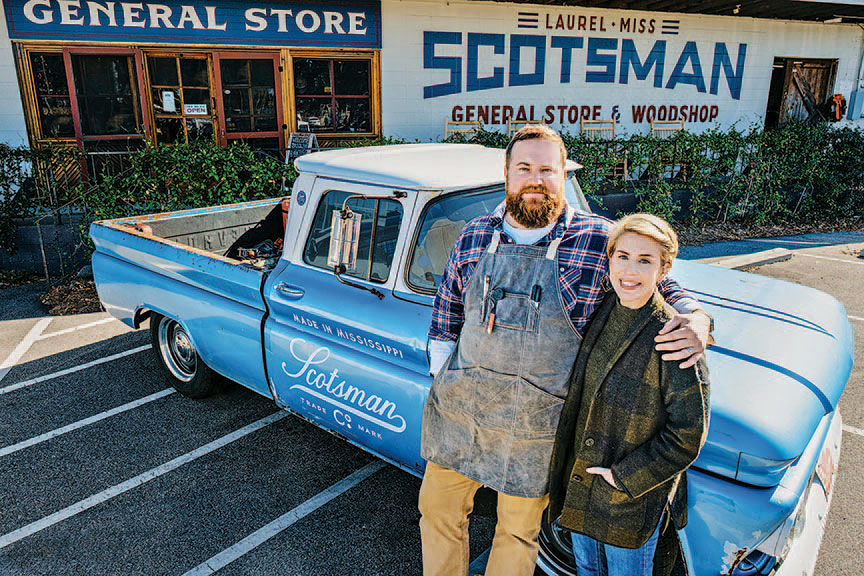
It is not a hobby shop. The business grew from a handful of part-time staff into an operation employing roughly 100 people, with a flagship on Front Street and a busy e-commerce arm shipping nationwide. Because the Napiers are founding co-owners, their stake isn’t a paycheck — it’s equity in a company that converts TV fame into repeat retail revenue.
Income Source #4: Scotsman Co. — Ben’s Woodworking Empire
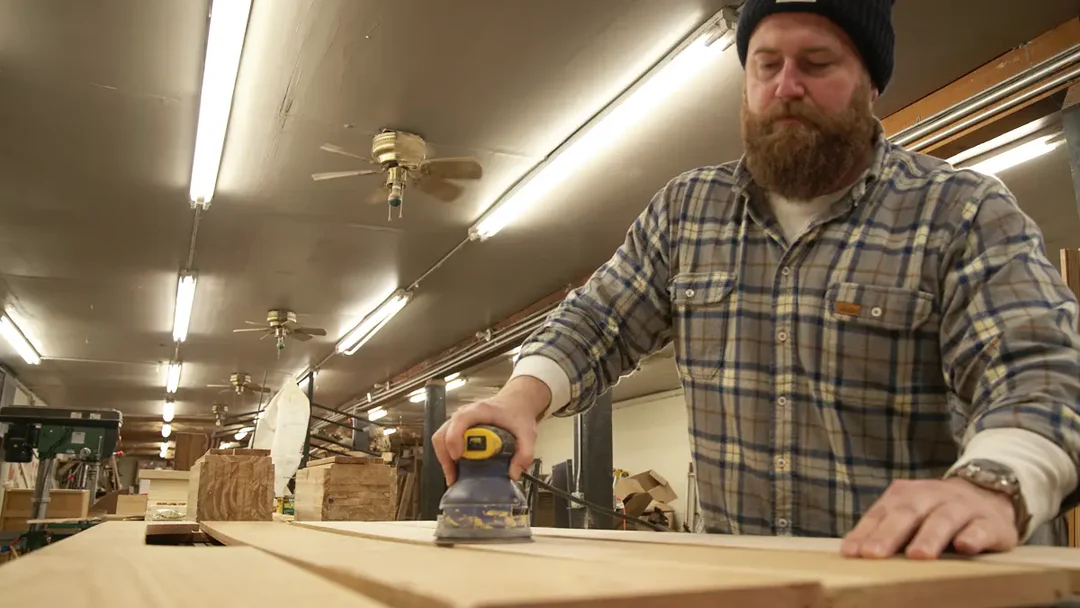
Ben’s woodworking began as a basement project while he was still a youth minister. Today it is Scotsman Manufacturing Co., a full production operation. When it launched in its expanded form in early 2022, it reportedly created around 85 jobs in Laurel.
Scotsman builds premium hardwood cutting boards and butcher blocks — exactly the kind of “buy it for life” products that command a serious markup — alongside a gentlemen’s workwear and goods label. This is arguably the most underrated piece of the Napier fortune. A manufacturing company is a productive asset: it earns money whether or not a camera is rolling, whether or not the show gets renewed.
Income Source #5: The “Family of Brands”
Laurel Mercantile and Scotsman are just the anchors. Around them, the Napiers and their partners have built a whole ecosystem of small businesses in town — the Scotsman General Store & Woodshop, the Scent Library (Erin’s home-fragrance line), a Snowball Stand, and a Food Truck Park.
Individually, none of these is a fortune-maker. Together, they form a diversified local economy with the Napiers’ names attached — and, importantly, they monetize foot traffic. Fans who travel to Laurel because of the show become paying customers once they arrive, turning the town itself into a revenue engine.
Income Source #6: Publishing and Books
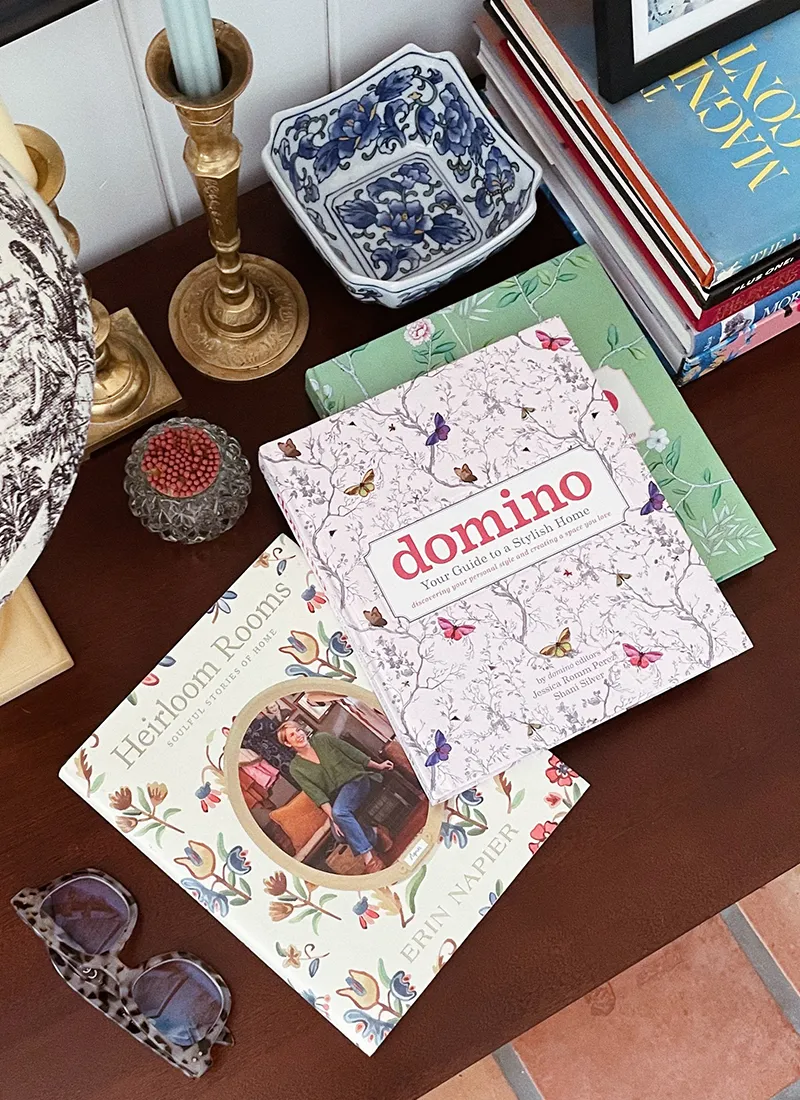
Erin is a legitimate, working author, not a celebrity with a ghostwriter. The couple co-wrote the memoir Make Something Good Today in 2018. Erin then went solo with real success: her children’s picture book The Lantern Housereached the New York Times bestseller list in 2022, and her essay collection Heirloom Rooms: Soulful Stories of Home(2023, Gallery Books) debuted as an instant New York Times bestseller, drawing praise from names like Drew Barrymore.
Books deliver advances and royalties — but they also feed the rest of the empire. Signed editions sell directly through Laurel Mercantile and the Scent Library, looping publishing income right back into the couple’s own cash registers.
Income Source #7: Licensing and Brand Partnerships
Fame at this level gets monetized through partnerships. Over the years the Napiers have lent their design eye to product collaborations — including a furniture line developed with manufacturer Vaughan-Bassett — alongside the wallpaper, lighting, and home-goods tie-ins that naturally come with being two of HGTV’s most trusted faces. Licensing is the highest-margin work they do: the Napiers design and approve, partners handle manufacturing and distribution, and a royalty arrives either way.
Income Source #8: Appreciating Real Estate
Finally, the asset that grows while they sleep. The Napiers own their beloved restored 1925 craftsman cottage as well as a 1930s Tudor-style farmhouse they call their “vacation house” — reportedly bought around $749,900 in 2021 and since estimated well above $830,000. Factor in the historic downtown buildings tied to their businesses, and a real slice of their net worth is simply property — in a town whose median home value has climbed measurably since they began restoring it.
So What Are Ben and Erin Napier Actually Worth?
Add all eight streams together, and most credible estimates place the Napiers’ combined net worth at around $5 million, with figures across sources ranging from $4 million to $6 million. (Both numbers are estimates — the couple has never disclosed the real total.)
If that sounds modest — Chip and Joanna Gaines are estimated near $50 million each — that’s the final twist worth understanding. The Napiers never built a brand engineered to be cashed out in one big sale. They built eight interlocking income streams designed to keep a small Mississippi town employed, themselves included. When Fortunenamed them to its “World’s 50 Greatest Leaders” list in 2021, it wasn’t for the size of their bank account. It was for what they chose to do with it.
In the end, Ben and Erin Napier’s net worth isn’t really a number at all. It’s a business model — and the business is Laurel.
