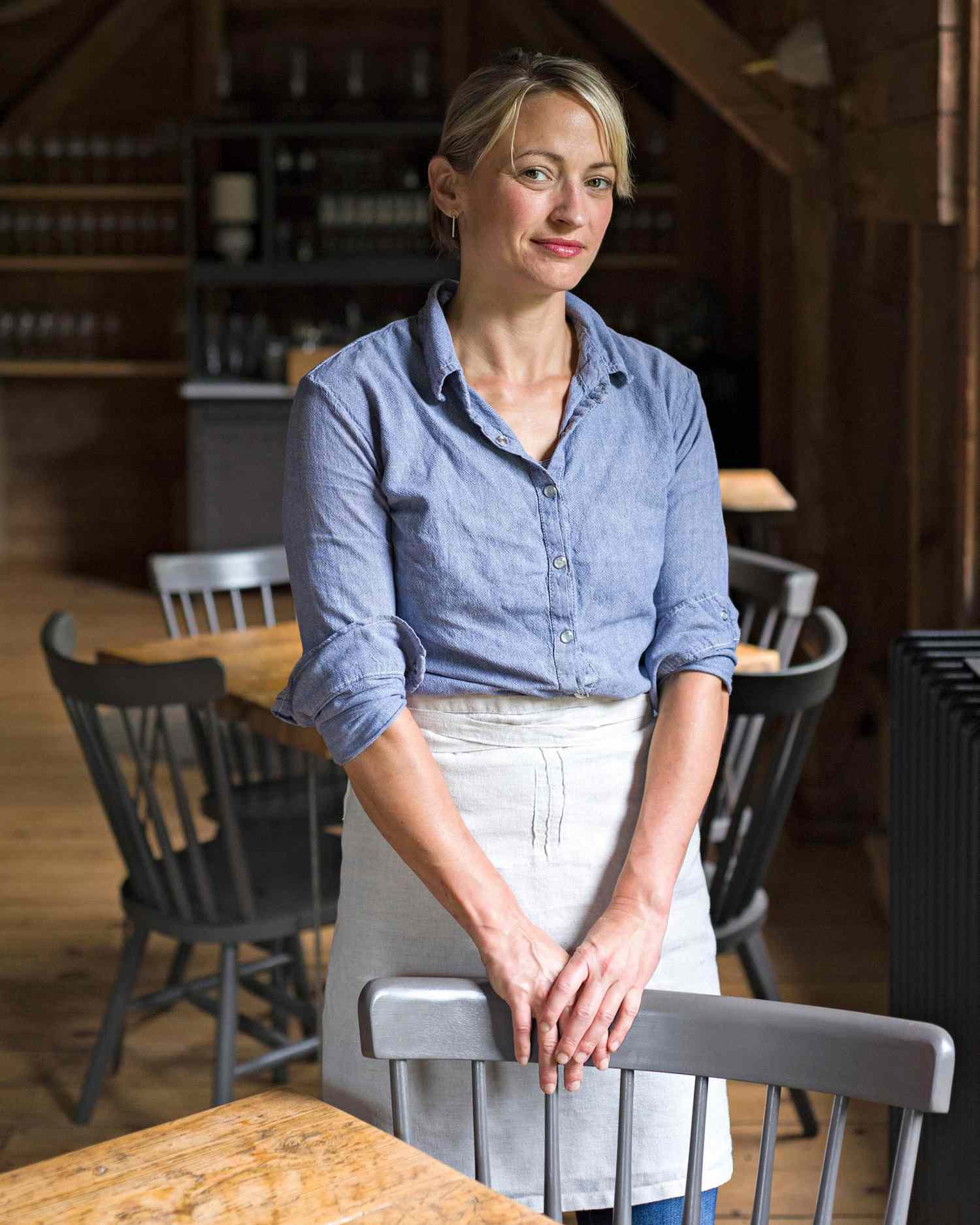
Meatloaf is already a comfort-food legend—but the version Ina Garten learned from Erin French adds a few simple twists that make it taste intentional, not just nostalgic. Erin shared her family’s “Dad’s Meatloaf” on Be My Guest with Ina Garten, and it’s the kind of recipe that disappears fast: juicy slices, little pops of flavor, and that sticky-sweet glaze that begs to be scraped up with a fork.
Why this meatloaf tastes different (in a good way)
A classic meatloaf can sometimes feel heavy or one-note. This one stays tender and flavorful because of a few smart choices:
-
Grated carrot adds moisture and a gentle sweetness, keeping the loaf from drying out.
-
Bread cubes instead of fine crumbs give small, soft pockets of texture throughout.
-
Pecorino + fresh thyme bring salty, herby depth so every bite tastes seasoned—not bland “meat brick.”
-
A brown sugar–ketchup–Dijon glaze turns glossy and caramelized in the oven, balancing sweet, tangy, and savory.
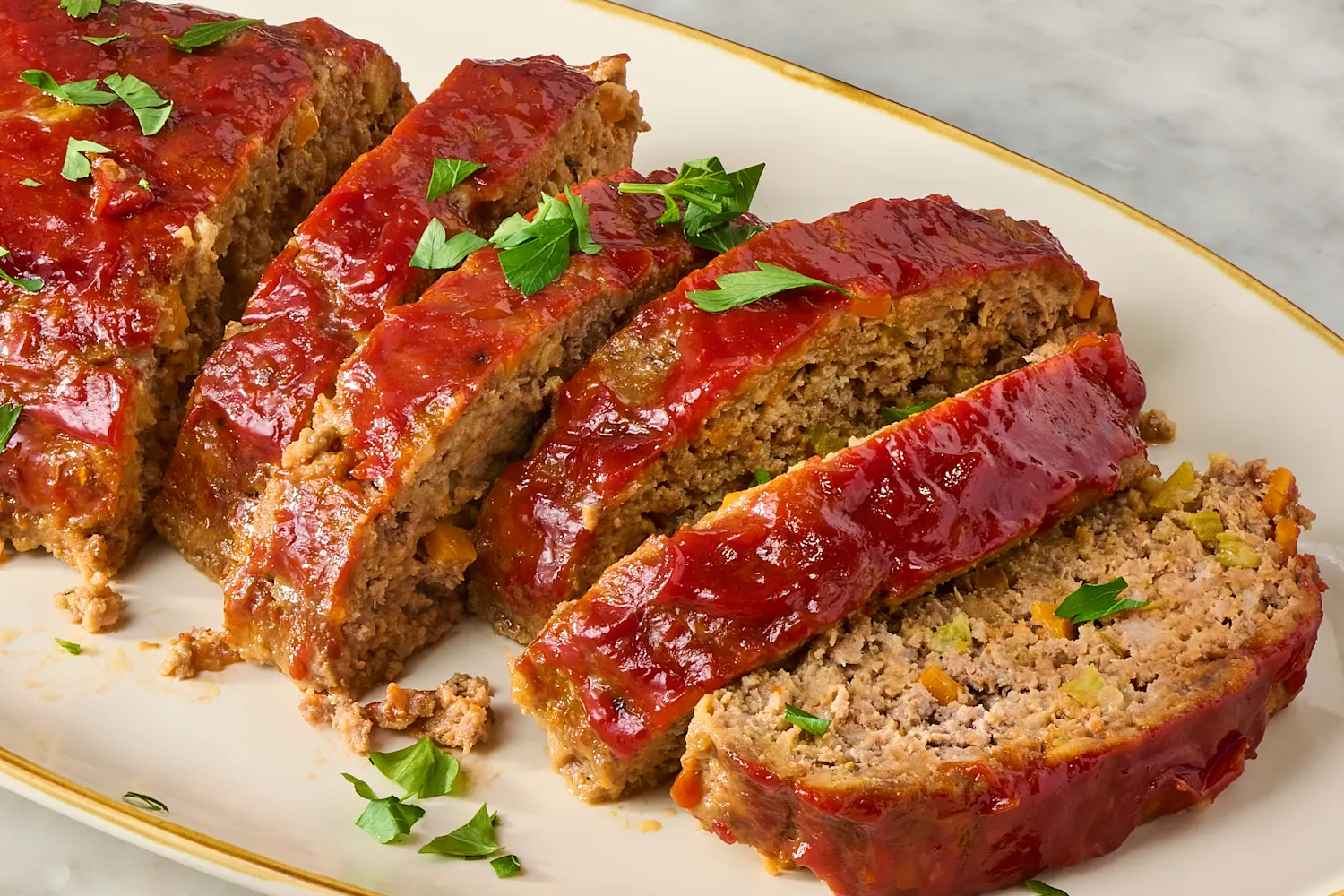
Erin French’s Dad’s Meatloaf (Food Network version)
Ingredients
Meatloaf
-
1 1/2 lb ground beef
-
1 1/2 lb ground pork
-
3/4 cup grated carrots
-
1/2 cup chopped shallots
-
1/2 cup grated pecorino cheese
-
2 cups bread cubes (about 1/2-inch), such as crusty sourdough
-
2 tbsp fresh thyme leaves
-
2 large eggs
-
1/2 cup whole milk
-
2 tsp kosher salt
-
6–8 twists black pepper
Glaze
-
1/2 cup packed light brown sugar
-
3/4 cup ketchup
-
1 tbsp Dijon mustard
Instructions
-
Heat oven to 375°F (190°C).
-
Mix all meatloaf ingredients in a large bowl just until combined. Avoid overmixing (that’s how meatloaf turns tough).
-
Shape into two 9×5-inch loaf pans.
-
Make glaze: stir brown sugar, ketchup, and Dijon until smooth. Brush a thick coat over the tops.
-
Bake until the center reads 150°F, about 45 minutes.
-
Rest 10–15 minutes, unmold, slice, and serve.
A quick food-safety note (worth doing right)
The recipe is written to pull at 150°F and rest. For ground meat, many home-safety guidelines recommend 160°F as the safe minimum internal temperature. The simplest approach: use a thermometer and make sure the thickest part reaches 160°F (either in the oven or by carryover during resting).
Tips that make this loaf “lick-your-fingers” good
Don’t overmix
Mixing too long compresses the meat and can make slices dense. Stop as soon as everything looks evenly distributed. (Hands work best.)
Grate carrot on the larger holes
Bigger shreds stay noticeable and keep the loaf moist—plus they blend into the meat without making it “vegetable-y.”
Glaze twice for extra shine
Brush once before baking, then add a second thin coat near the end if a thicker, stickier top is the goal (watch closely so the sugar doesn’t scorch).
Easy swaps and variations
-
Cheese: Pecorino is the official vibe, but parmesan works too (similar salty punch).
-
Bread: Any sturdy leftover bread works—sourdough, country loaf, even crusty ends.
-
Batch size: The Lost Kitchen also shares a smaller single-loaf “Glazed Meatloaf” version (1 lb beef + 1 lb pork) if a two-loaf recipe feels like too much for the week.
What to serve with it
This meatloaf is rich and glaze-forward, so it pairs best with sides that are creamy, crisp, or bright:
-
mashed potatoes or buttery rice
-
roasted carrots or green beans
-
a sharp, crunchy salad (vinaigrette cuts the sweetness)
Storage and leftovers
-
Fridge: Cool, wrap tightly, and refrigerate.
-
Reheat: Slice first, then warm gently (covered) so it stays juicy.
-
Leftover idea: Meatloaf sandwich + extra glaze as a spread = next-day upgrade.
If you want, the article can be formatted in a “recipe card” style (Prep/Cook/Serves + printable layout) while keeping the same wording.



0 Comments